
Art of French Political Institutions
French political institutions are often housed in stunning hôtels particuliers—grand private mansions turned public seats of power—that blend aristocratic luxury with neoclassical grandeur.
What we can cover during tour and lecture
Palais Bourbon – National Assembly
Originally built in 1722–28 for the Duchesse de Bourbon (Louis XIV’s illegitimate daughter), this Left Bank mansion embodies early 18th-century French classicism: sober stone facades, high-ceilinged salons, and manicured gardens. Nationalized in 1790, it hosted Napoleon’s Council of Five Hundred, then gained its iconic Neoclassical colonnade in 1806–07 to mirror the Madeleine church across the Seine. Inside, the hemicycle chamber (designed by Jacques-Louis David) features gilded woodwork, allegorical reliefs, and the perchoir presidential desk—symbols of revolutionary order amid aristocratic elegance.
126 rue de l'Université, 75007 Paris
Palais du Luxembourg – Senate
Built 1615–45 by Marie de Médicis as her grand residence inspired by Florence’s Palazzo Pitti, this Left Bank palace features Italianate facades, monumental staircases, and vast gardens. Napoleon I made it the Senate seat in 1804; 19th-century additions by Alphonse de Gisors include the hemicycle chamber (1836–41), Delacroix’s frescoed library, and gilded salons. Rococo interiors mix with Empire grandeur: boiseries, crystal chandeliers, and murals glorifying republican virtue amid princely luxury.
15, rue de Vaugirard 75291 PARIS
Napoleon III Apartments – Louvre
Hidden above the Richelieu wing, these opulent Second Empire state rooms (restored 1852–70) showcase Napoleon III’s taste: crimson silk walls, gilt bronze mounts, Boulle furniture, and Sèvres porcelain services. Grand salons for receptions feature crystal lustres, parquet de Versailles floors, and overdoors by Horace Vernet. They embody Haussmann-era splendor—bridging Empire pomp with modern functionality—as the emperor hosted Europe’s elite amid revolutionary echoes.
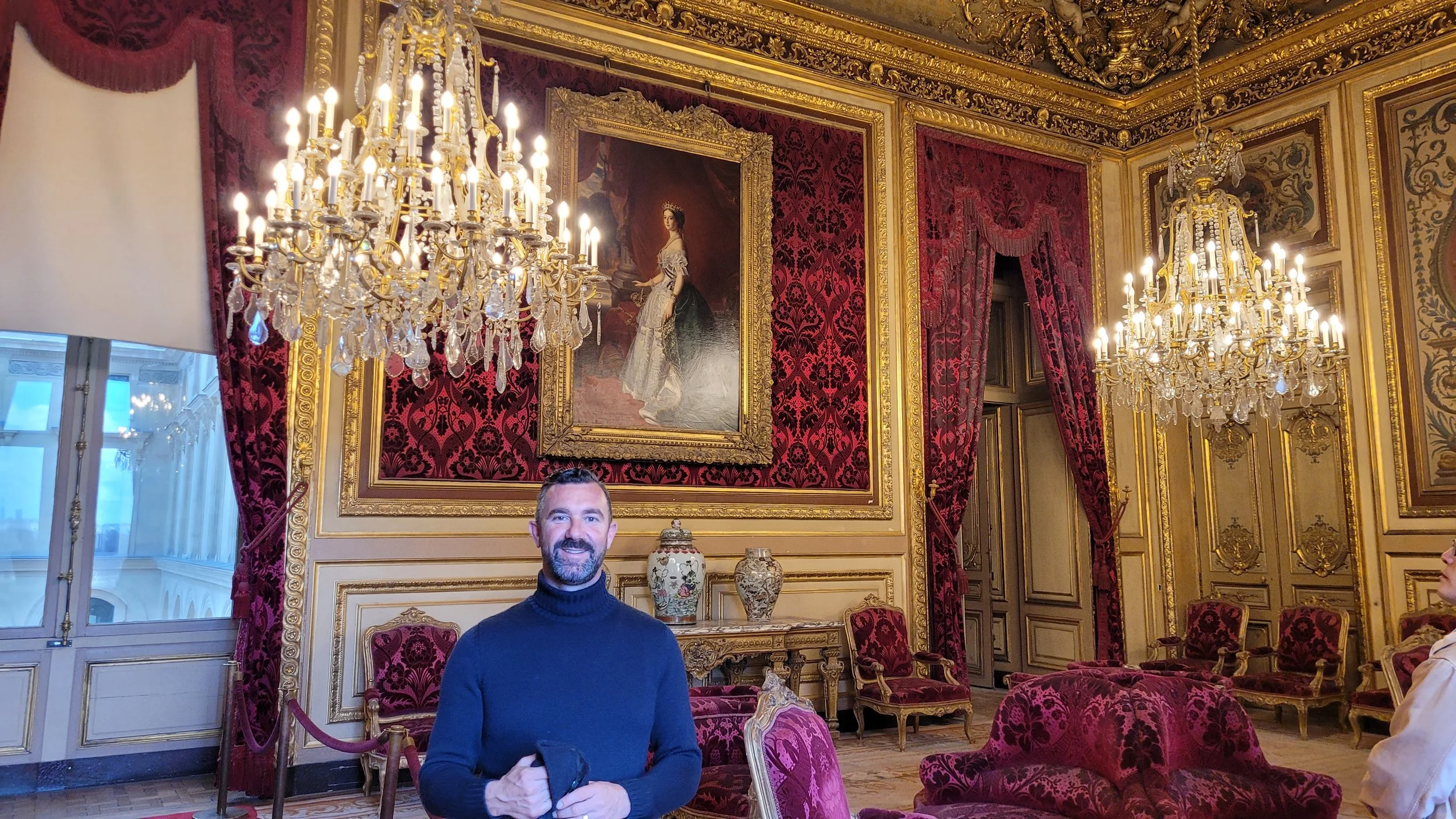
Can you imagine that these Napoleon III Appartments of the Louvre used to be the office of Ministry of Finances - France ?
Hôtel Matignon – Prime Minister
This 1721 hôtel particulier in the 7th arrondissement exemplifies Louis XV neoclassicism: pale stone facade, wrought-iron balconies, and intimate courtyards. Acquired by Talleyrand in 1804, it became the prime minister’s residence in 1935. Interiors blend Regency paneling, Empire furnishings, and 20th-century updates: the grand salon’s marble fireplaces, Gobelins tapestries, and formal dining room host discreet diplomatic dinners.
Hotel Matignon : 57 Rue de Varenne, 75007 Paris
Hôtel de Ville – Paris City Hall
This Right Bank icon started as a 14th-century mayoral residence but was rebuilt in flamboyant Renaissance style (1533–1628) under Francis I, with Italianate loggias, steep roofs, and ornate dormers. Destroyed by the 1871 Commune, it was faithfully reconstructed (1874–82) on a grander scale, adding opulent Second Empire interiors: marble staircases, crystal chandeliers, and murals glorifying Paris’s history. Today, its 152-meter facade hosts receptions in gilded salons once reserved for kings and revolutionaries.
5, rue de Lobau, Paris 4e
Palais de l’Élysée – Presidency
Built in 1718–21 as the Hôtel d’Évreux for a rich financier, this Faubourg Saint-Germain gem screams Louis XV Rococo: curved pavilions, pastel salons, and intimate gardens. It became a presidential residence under Louis-Napoleon (1848 onward), blending Regency frescoes with Empire furniture. The private apartments mix Empire pomp (gilt bronzes, Sèvres porcelain) with modern functionality.
55 rue du Faubourg-Saint-Honoré 75008 Paris
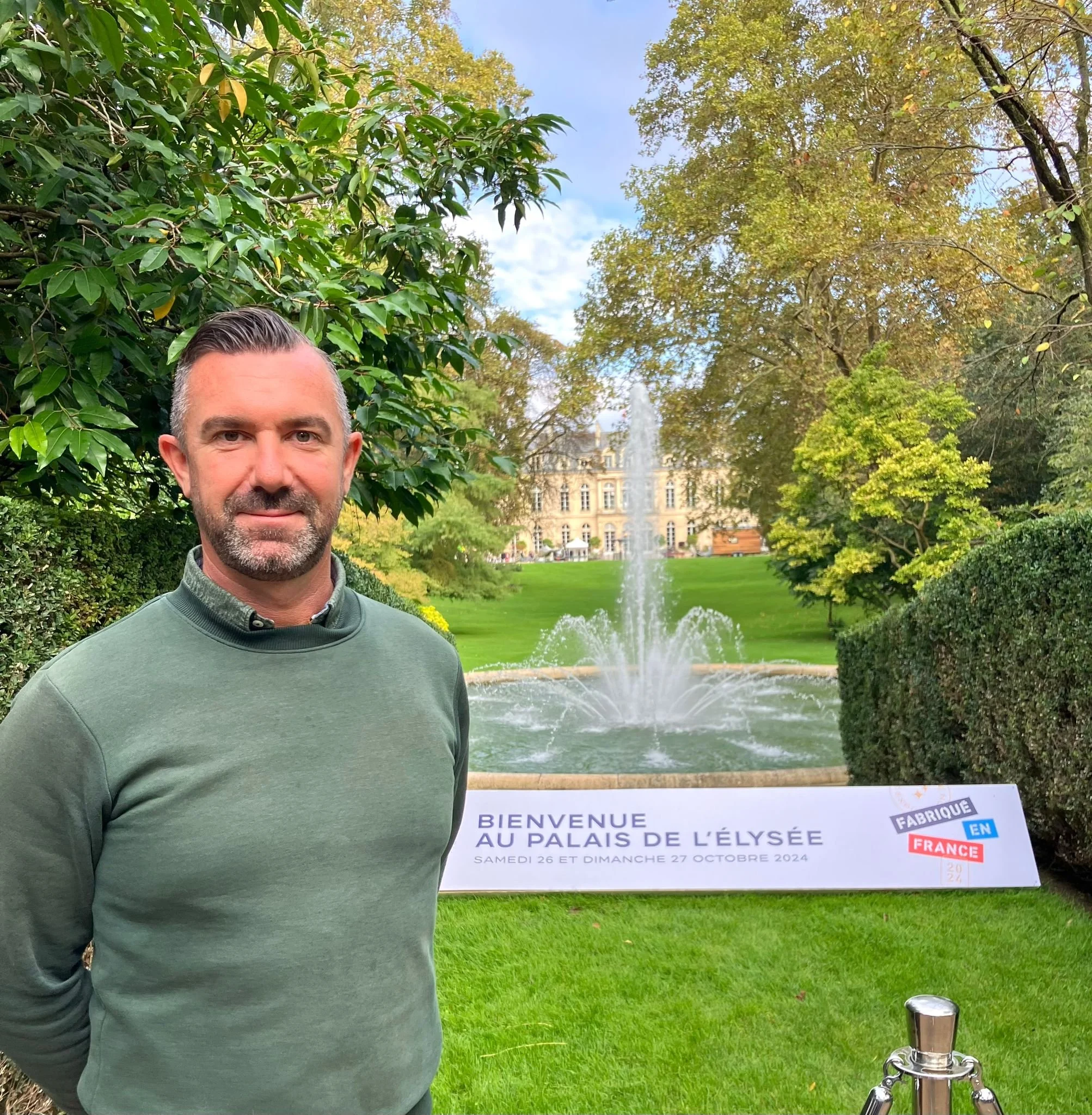
Join my Paris Politics tour
Contact Pascal
You can cutomize a private walking tour of these institutions by car.
Use my direct email contact@napoleonxplore.com or send me a Whatsapp +33 6 99 72 68 52.
Common architectural thread
Parisian Formula
During my Lecture, we will talk about how these hôtels share a Parisian formula:
Exterior: Restrained stone facades hiding lavish interiors.
Interiors: Parquet floors, boiseries (carved paneling), and overdoors by top artists.
Evolution: Ancien Régime luxury → Revolutionary reuse → Napoleonic/19th-century neoclassical facelifts.
They stand as living museums where France’s political drama unfolds amid 18th-century splendor.
Proximity and public access
These gems cluster tightly across central Paris, walkable or a short Metro hop: Palais Bourbon (7th) to Élysée (8th) is 15 min; Luxembourg (6th) to Hôtel de Ville (4th) about 25 min; Matignon sits steps from Bourbon; Louvre/Élysée under 20 min. Public access varies—Palais Bourbon/Luxembourg offer guided visits (free, book ahead); Élysée/Hôtel de Ville exceptional openings; Matignon/Louvre apartments rare (group request); exteriors always visible, blending into vibrant neighborhoods.
Together, we can do a private car tour and see the exteriors and interiors if allowed (depending on the dates).
Lecture via Zoom - 1h
Pascal Billaud brings these majestic hôtels particuliers to life through captivating Zoom lectures and debates. Whether exploring the gilded salons of the Palais Bourbon, the Renaissance splendor of the Hôtel de Ville, or the hidden Napoleon III apartments, Pascal combines vivid visuals, historical anecdotes, and interactive Q&A to transport you inside these powerful houses—revealing their architectural secrets, political dramas, and enduring symbolism without ever leaving your screen. Perfect for groups, clubs, or curious individuals seeking an immersive experience.
About the writer
Pascal Billaud & Political History Paris
Political History Paris is the project of Pascal Billaud, a licensed official French tour guide and art history scholar based in Paris, specialising in the political history, architecture, and heritage of the French capital. Drawing on years of academic study and guiding in palaces, museums, and hôtels particuliers, Pascal created this experience to offer rigorous, in-depth explorations of France’s seats of power—from the Palais Bourbon to the Élysée—for those seeking more than surface-level visits. His narratives connect architectural splendor, political drama, and historical context, revealing how these grand houses continue to shape French governance and identity today.
Contact Pascal
You can cutomize a private walking tour of these institutions by car.
Use my direct email contact@napoleonxplore.com or send me a Whatsapp +33 6 99 72 68 52.